A Tale of Two Souths: From the Trulli of Puglia to the Gods of Calabria
Our first visit to Southern Italy was a challenging journey, one that left us with more questions than answers. Was it the approaching winter, the self-sufficient nature of the Sicilians, or the stark, beautiful landscapes that felt so defined and imposing? We had hoped for a deeper connection than we found, so we decided to return to Sicily – to give it another chance and to immerse ourselves once more in the simple pleasures of rich olive oil, perfect pasta, and wood-fired pizza. And who knows what other delights we might discover?
As I look back through my travel notes, I’m reminded that our most recent trip did, indeed, take us back to Sicily. While some things remained comfortingly the same, others had shifted – but that’s a story for another time. Our journey truly began not in Sicily, but in the sun-drenched region of Puglia, and that is the story I want to share with you now.
Puglia: The Sun-Kissed Heel of the Boot
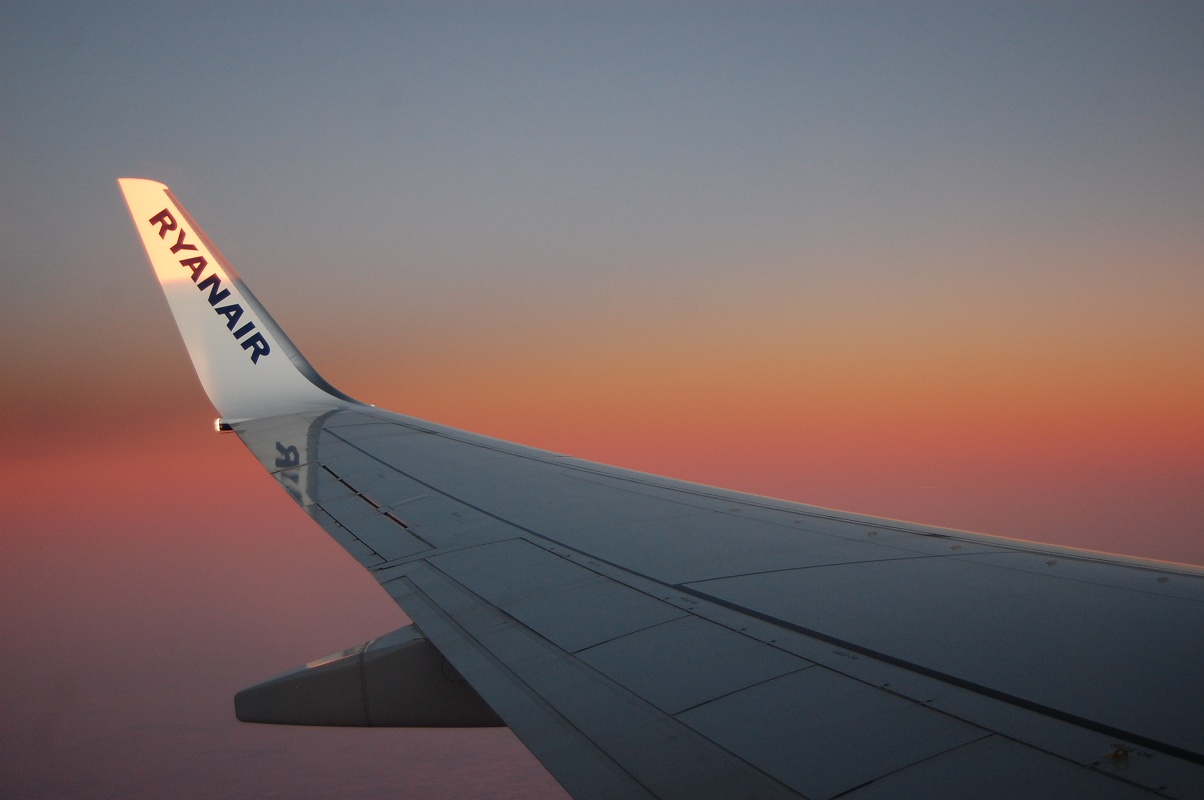
Our adventure began in southeast Italy at the tail end of September, touching down at Brindisi Airport in the Puglia region. If you picture Italy as a boot, Puglia is the spectacular heel, jutting out into the azure seas. This stunning region is lapped by two warm seas – the Adriatic on its east coast and the Ionian to the south – giving it an enviable coastline and a wonderfully mild climate.
Stretching over 19,345 square kilometres, Puglia is roughly the size of Slovenia or Israel. Its long, narrow shape means it shares borders with three other Italian regions: Molise, Campania, and Basilicata. Beyond its beautiful beaches and rolling olive groves, Puglia is a treasure trove of history. It’s one of Italy’s most archaeologically rich areas, having been inhabited and ruled by everyone from the ancient Greeks and Normans to Muslims and neighbouring Sicilians, each leaving their own unique mark.
Alberobello: A Fairytale Come to Life
We left the coastal plain of Brindisi and drove into the rolling hills of the Valle d’Itria, a patchwork of olive groves and vineyards, before the iconic conical roofs appeared on the horizon. From Brindisi, we set off for the magical town of Alberobello, a mere 80-kilometre drive. We had booked a stay at the charming Relais Masseria Rosa, a hotel housed in a traditional trulli building, and were eager to explore the UNESCO-listed streets the next day.
But this is Italy, and in Italy, you learn to expect the unexpected! Our plans were almost immediately thwarted when we found ourselves quite seriously stuck at the car rental desk. After what felt like an age, we successfully navigated the bureaucratic maze, but by the time we hit the road, it was completely dark, and the picturesque Puglian landscape was hidden from view.
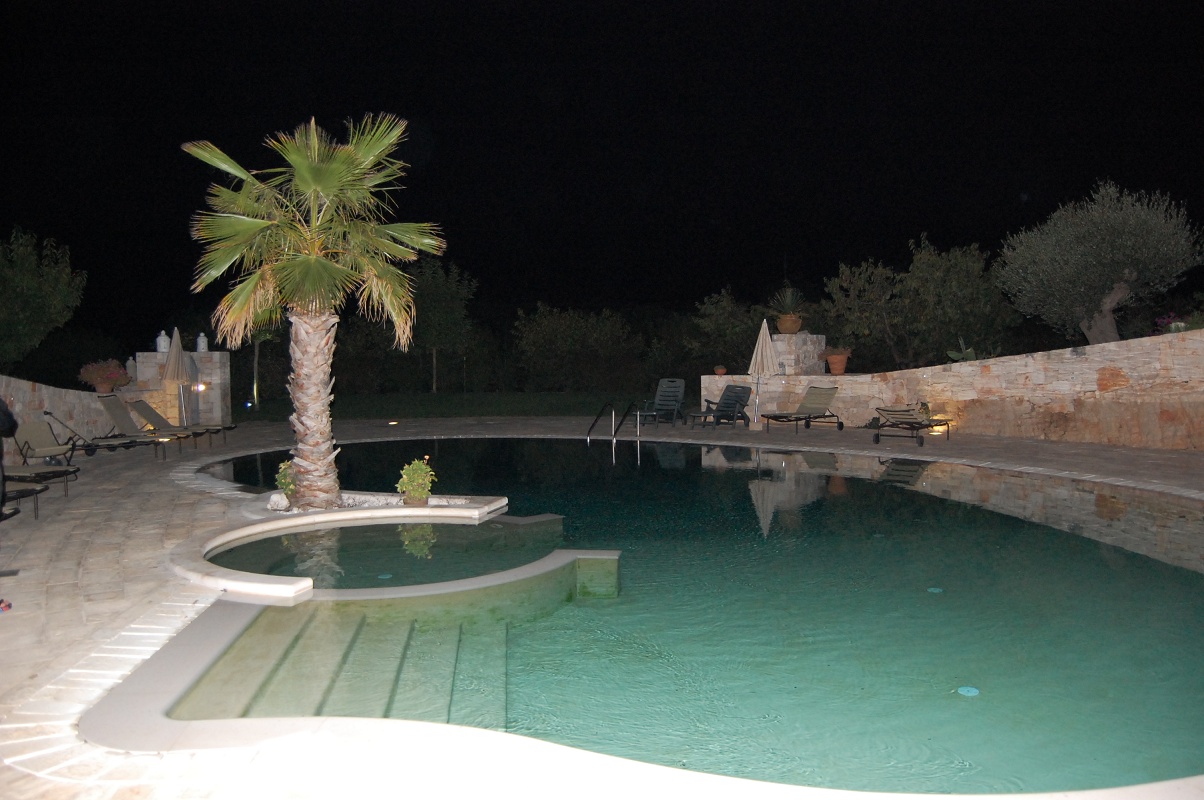
We finally found our hotel on the outskirts of town close to midnight, expecting to do nothing more than collapse into bed. Yet Italy, in its wonderful way, had a delightful surprise in store. The hotel grounds featured a huge, inviting swimming pool. Finding the water still wonderfully warm under the stars, all thoughts of sleep vanished. We spent a glorious hour swimming, our travel weariness washed away in the most perfect, unexpected start to our trip.
The Enchanting Trulli of Alberobello
The next day, we discovered the true magic of Alberobello. The trulli are incredible, white-washed dry-stone huts with conical roofs that look like they’ve been plucked from a fairytale. Built many centuries ago using a prehistoric layering technique, their main advantage was their ingenious design: they required no cement or mortar to hold them together.
The locals had a clever reason for this. In ancient times, when tax inspectors or marauding troops were sent by distant rulers, homeowners could simply pull out a key stone, causing the house to collapse into a mere pile of rubble. Once the danger passed, the trullo could be rebuilt quickly and with relatively little effort – a brilliant tax-dodging scheme of its day!
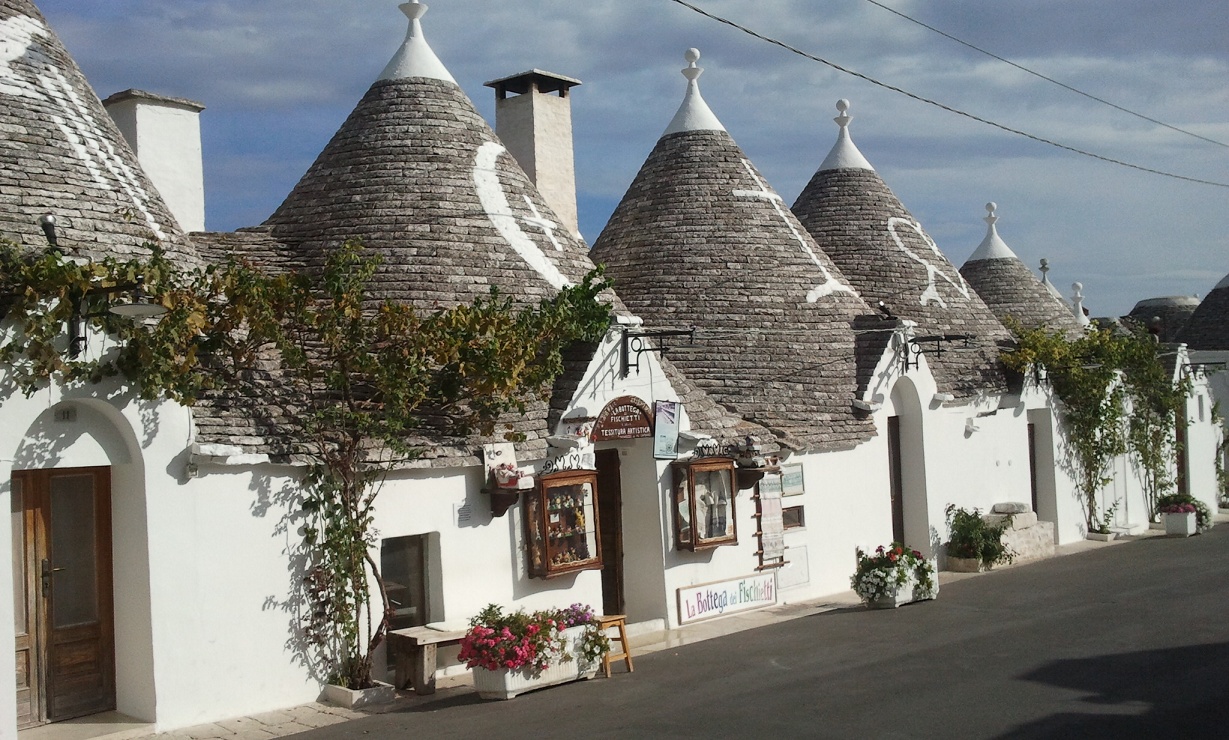
Hundreds of these unique structures have survived, with around 1,500 concentrated in Alberobello. While many are private homes, others have been lovingly converted into charming B&Bs, souvenir shops, and restaurants. Look up, and you’ll see their roofs adorned with mysterious, white-painted symbols – said to be primitive, magical, or religious signs to protect the inhabitants.
Southward Bound: The “Beach of the Gods”
After several enchanting hours lost in the labyrinthine streets of Alberobello, it was time to move on. Our main destination, the great island of Sicily, was calling. But the journey south held its own treasures. We stopped in the Calabria region, famed for its beautiful beaches, and specifically in the town of Tropea.
Perched dramatically on cliffs above the turquoise Tyrrhenian Sea, Tropea’s old town is a mesmerising sight, with ancient fortifications standing guard above the sand. It’s no wonder this place is nicknamed the ‘Beach of the Gods’. As arguably Calabria’s most famous seaside resort, Tropea offers some of the most spectacular views in all of Southern Italy, a stunning reminder that the beauty of the Italian south extends far beyond its most famous islands. Our brief taste of Puglia’s magic and Calabria’s drama had already begun to provide the connection we’d been searching for, leaving us eager for the next chapter in Sicily.
adventures attractions Belgium Bulgaria city break Croatia Czech Republic day out England Estonia France Germany Greece heritage hiking holidays Iceland islands Italy Latvia Lithuania London Montenegro nature Norway Poland recipes Rome Spain Switzerland